- Pregnancy-related back and pelvic pain
- Pelvic girdle pain
- Sciatica during pregnancy
- Postnatal weakness and deconditioning
- Urinary incontinence after childbirth
- Pelvic floor weakness
- Loss of bladder control
- Pelvic muscle dysfunction
- Diastasis recti (abdominal separation)
- Core weakness after pregnancy
- Postural instability
- Post-caesarean recovery
- Recovery after hysterectomy
- Rehabilitation after gynecological surgeries
- Scar stiffness and abdominal tightness
- Chronic pelvic pain
- Lower back pain related to pregnancy or postpartum
- Difficulty returning to daily activities
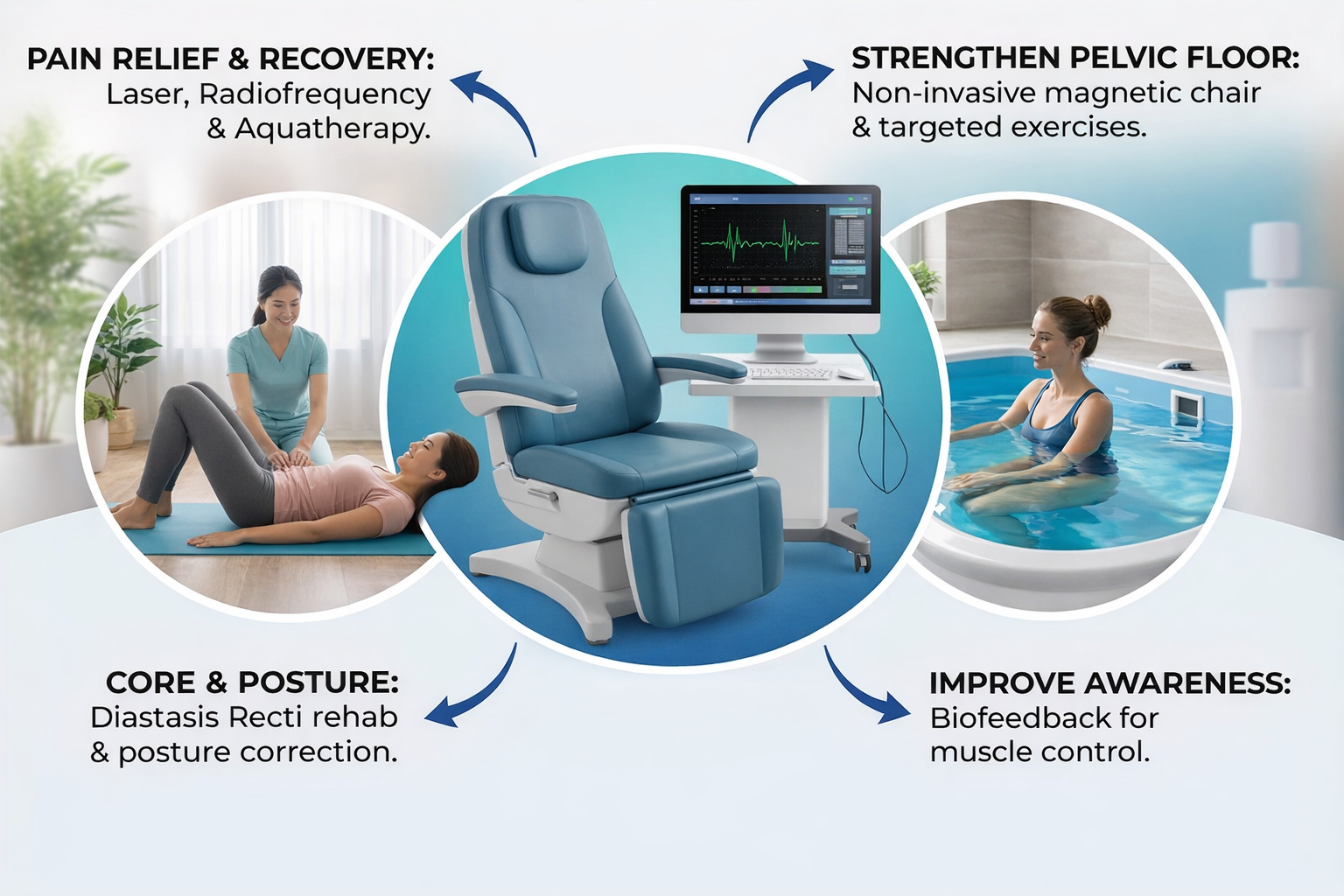
Activate Deep Muscles
Pelvic and postpartum muscles are deep and difficult to engage - magnetic stimulation and biofeedback solve this, working where traditional exercises cannot
Non-Invasive & Dignified
Our specialised equipment and biofeedback systems provide effective treatment in a comfortable, private setting - no undressing or invasive procedures needed
Rebuild Core Stability
Targeted diastasis recti repair, posture correction, and pain relief restore the structural support. Learn about pelvic health rehabilitation for complete recovery.
Complete Recovery
Addressing muscle weakness, pain, bladder control, and posture together - helping women recover fully and return to daily activities with confidence
Frequently Asked Questions
Strongly recommended. Pregnancy and childbirth weaken pelvic floor muscles significantly - early rehabilitation prevents long-term incontinence, pelvic pain, and sexual dysfunction. Starting 6-8 weeks postpartum produces the best outcomes, and our team at Navthera in Jaipur specializes in postpartum recovery.
Sometimes, but not always. Without targeted rehabilitation, incontinence often persists or worsens over time. Early pelvic rehab resolves or significantly improves incontinence in most women. The longer you wait, the harder the recovery becomes - starting postpartum gives you the best outcome.
Yes. Prenatal rehabilitation at Navthera in Jaipur helps manage pregnancy-related pain, reduces risk of excessive weight gain, and prepares your body for childbirth. Gentle mobility work, pelvic floor training, and posture correction during pregnancy lead to easier labour and faster postpartum recovery.
Diastasis recti is separation of the abdominal muscles after pregnancy - affecting 60% of postpartum women. Specific core retraining exercises reconnect and strengthen these muscles. Most women see significant closure within 8-12 weeks of targeted therapy, restoring core stability and posture.
Yes. Our women's health program uses external magnetic stimulation, biofeedback, and guided exercise - all performed through clothing with complete privacy and dignity. We never use internal procedures unless specifically referred by your gynaecologist for a specific clinical reason.
We recommend starting gentle assessment at 6-8 weeks postpartum (after bleeding has stopped). If you had an uncomplicated vaginal delivery, gentle mobility work can begin even earlier. After C-section, we wait for surgical clearance. The goal is early intervention to prevent long-term postpartum dysfunction.