- Urinary incontinence (leakage)
- Urgency and frequent urination
- Neurogenic bladder
- Loss of bladder control after surgery
- Fecal incontinence
- Postpartum pelvic weakness
- Pelvic organ prolapse (mild to moderate)
- Pelvic pain
- Pain during intercourse
- Recovery after gynecological surgery
- Erectile dysfunction (ED)
- Post-prostate surgery incontinence
- Pelvic pain in men
- Bladder dysfunction after stroke or spinal injury
- Pelvic floor weakness due to aging
- Chronic pelvic muscle tightness
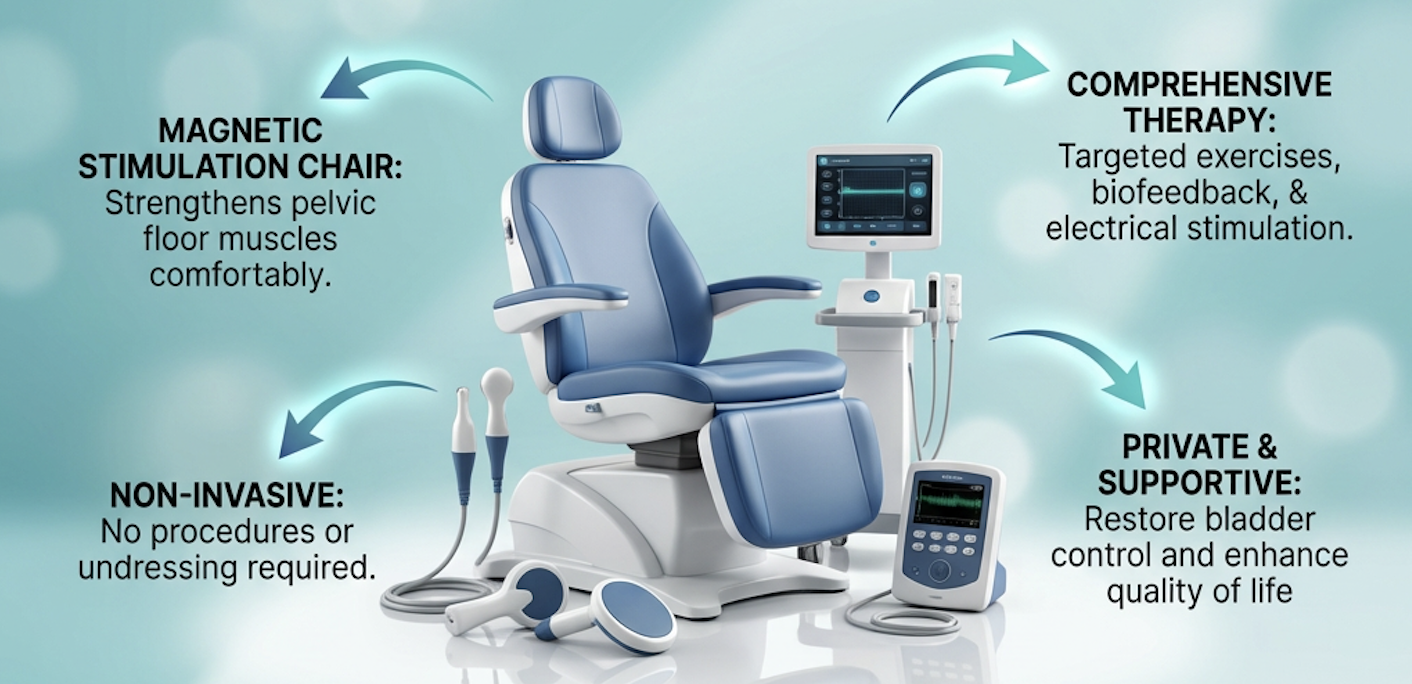
Muscles You Cannot Reach
Pelvic floor muscles are deep and difficult to activate voluntarily - magnetic stimulation does it automatically, helping where exercises alone often fail
Non-Invasive & Comfortable
The ISKRA chair works through clothing with no preparation needed - making treatment accessible, dignified, and easy to commit to
Restores Control
Combined magnetic and electrical stimulation retrains nerve-muscle coordination, significantly improving bladder control and sexual function
Lasting Results
When combined with guided therapy and lifestyle changes, patients experience faster improvement, greater confidence, and long-term relief without surgery
Frequently Asked Questions
No. The ISKRA chair at Navthera in Jaipur works through your clothing - no undressing, no examination, no invasive procedures. Treatment is completely private, dignified, and designed specifically for your comfort. Many patients are relieved by how straightforward and comfortable it is.
Very effective. Clinical studies show significant improvement in incontinence and sexual function - especially when combined with guided therapy and lifestyle coaching. Most patients experience noticeable improvement within 4-6 weeks of regular sessions.
No. Men benefit tremendously from pelvic rehabilitation - particularly for erectile dysfunction, post-prostate surgery incontinence, and pelvic pain. The same magnetic stimulation technology works effectively for male pelvic floor dysfunction.
Many patients improve significantly or resolve incontinence completely without surgery. Advanced pelvic rehab is the first-line treatment - we only refer for surgery if conservative therapy doesn't produce sufficient improvement after a thorough trial period.
This varies by condition and severity. Most patients benefit from 1-2 sessions per week for 4-12 weeks. Our therapists assess your progress regularly and adjust the schedule - many patients require fewer sessions over time as their pelvic floor strengthens.
Yes, absolutely. In fact, integrating pelvic therapy with postpartum core rehabilitation and mobility work often produces better overall recovery. Our women's health program at Navthera includes both specialities to address complete postpartum rehabilitation.