- Positional vertigo (BPPV)
- Chronic dizziness and lightheadedness
- Motion sensitivity
- Imbalance while walking
- Stroke-related imbalance
- Parkinson's disease balance problems
- Peripheral neuropathy causing instability
- Cerebellar and coordination disorders
- Unsteady walking
- Gait abnormalities
- Difficulty standing for long periods
- Post-surgery or post-injury imbalance
- Frequent falls or fear of falling
- Weakness-related instability
- Loss of confidence while walking
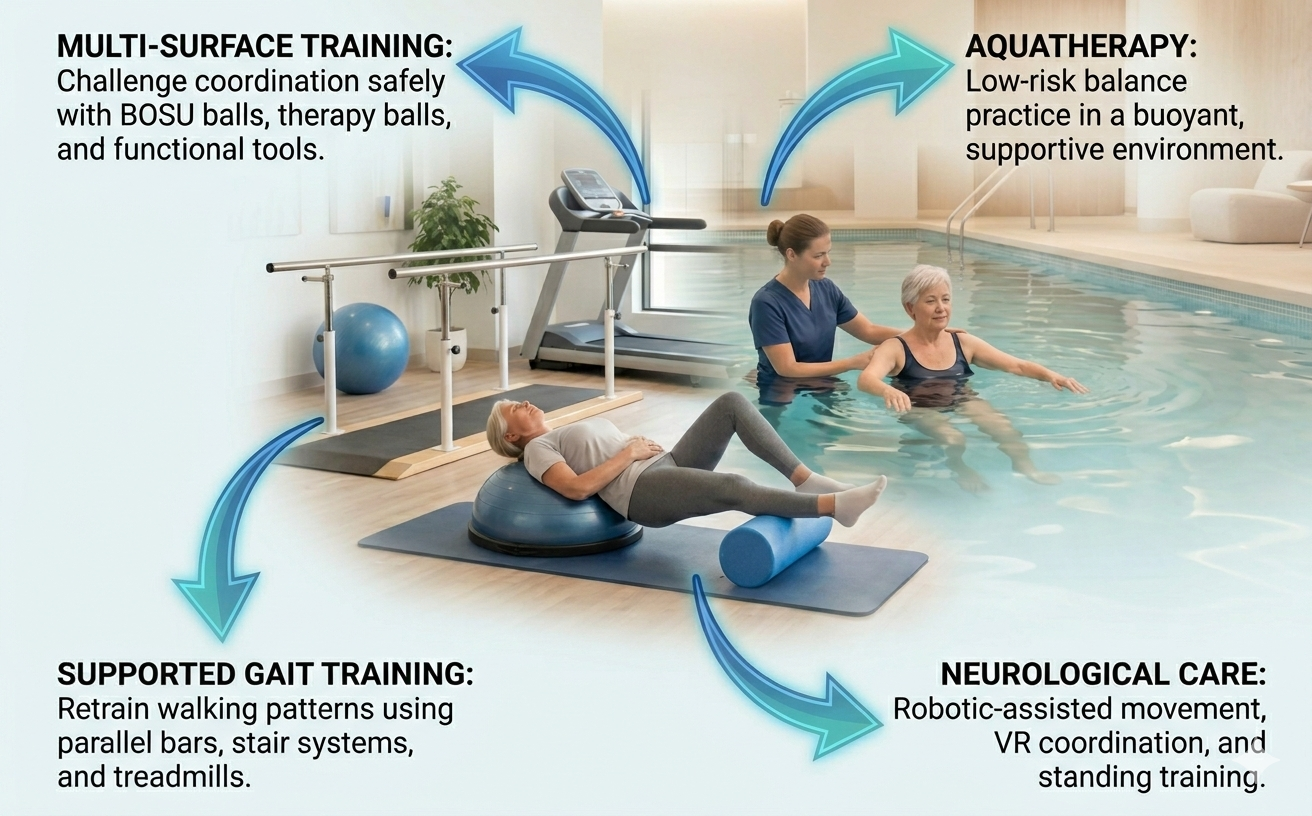
Retrain Your Balance System
Progressive challenges retrain the body's ability to sense position, shift weight, and respond to instability - the foundations of safe movement
Walk With Confidence
Surface and gait training restores natural walking patterns, step negotiation, and the ability to navigate real-world environments safely
Reduce Fall Risk
For elderly and neurological patients, fall prevention is life-changing. Balance training synergizes well with neurological rehabilitation for optimal recovery.
Safe Progress
Aquatherapy at our Jaipur facility allows earlier balance training - discover aquatherapy benefits for vestibular patients building capability before land-based exercise
Frequently Asked Questions
For many conditions, yes - particularly BPPV (positional vertigo), which responds exceptionally well to specialized repositioning maneuvers. For other causes, rehabilitation significantly reduces dizziness severity and improves your ability to function despite it. Most patients see substantial improvement within 4-6 weeks.
BPPV often recurs, but it's highly treatable. Our specialized maneuvers resolve symptoms in many patients within 1-3 sessions. Even if it returns later, the same treatment works. Vestibular exercises reduce recurrence risk significantly - which is why ongoing home balance training is recommended.
Yes. While progressive conditions worsen over time, specialized balance training slows decline significantly and often improves stability beyond expected. Even small improvements in balance translate to major gains in independence and safety - preventing falls is life-changing.
VR provides progressive visual challenges that retrain the brain's balance and spatial orientation systems. It's particularly effective for dizziness - exposing the vestibular system to controlled movement challenges that gradually reduce sensitivity and improve compensation.
Absolutely. Many balance patients develop fear-avoidance - they restrict activity to prevent falls, which actually worsens balance. Progressive confidence-building training at Navthera in Jaipur addresses both the physical balance deficit and psychological fear, restoring safe independence.
Vestibular rehab specifically retrains the inner ear and balance system through specialized movements and exercises. It's different from general balance training because it targets the root cause - the vestibular system's ability to sense head movement and body position - rather than just building muscle strength.