- Weakness after chemotherapy or radiation
- Severe fatigue and reduced endurance
- Muscle loss and deconditioning
- Difficulty returning to daily activities
- Breast cancer surgery rehabilitation
- Shoulder stiffness after mastectomy
- Post abdominal or pelvic cancer surgery recovery
- Pain and movement restriction after surgery
- Arm swelling after breast cancer treatment
- Leg swelling after pelvic cancers
- Post-surgical lymphatic swelling
- Chronic lymphedema
- Cancer-related pain
- Joint stiffness and reduced movement
- Scar tissue tightness
- Postural changes
- Bladder dysfunction after prostate or pelvic cancers
- Pelvic floor weakness
- Reduced physical capacity
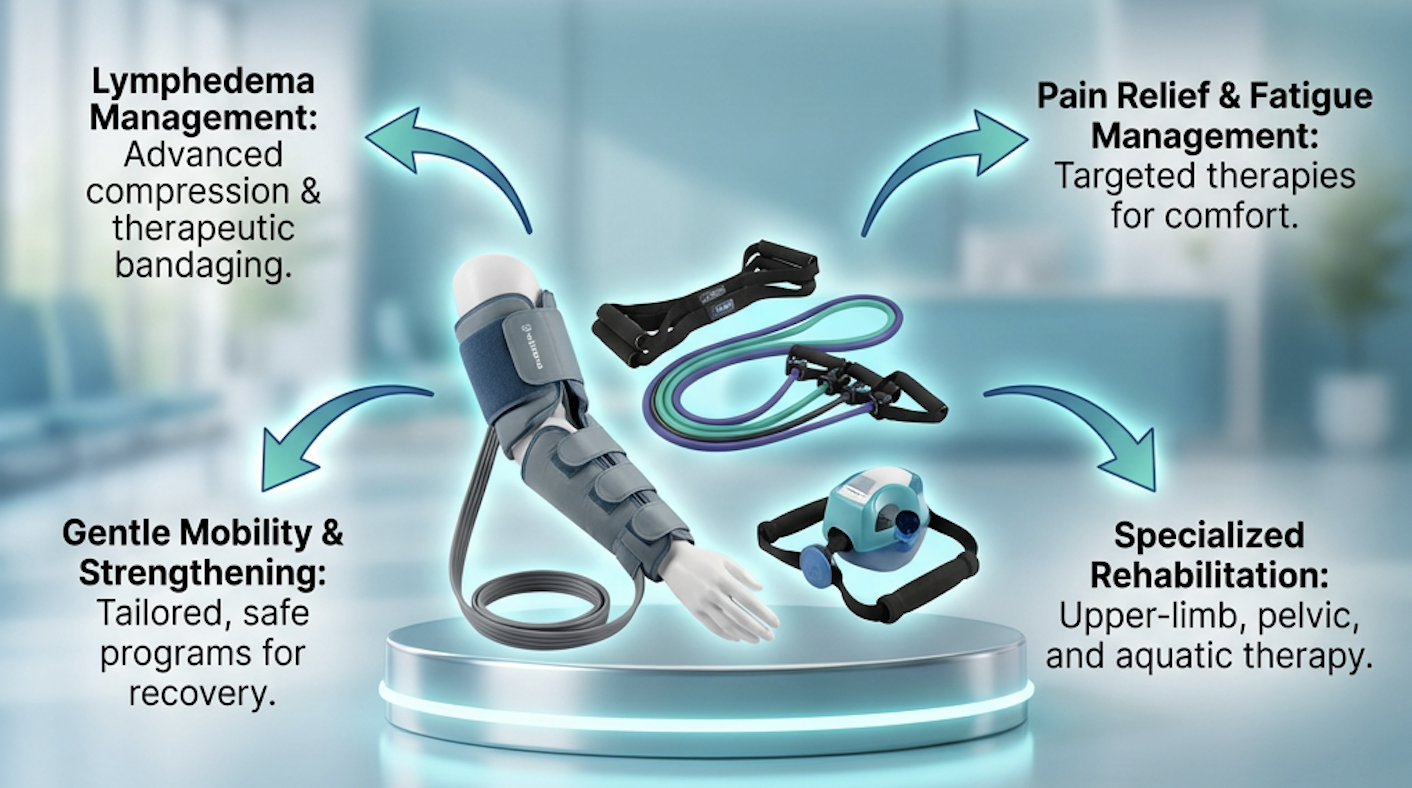
Manage Lymphedema
Compression therapy and bandaging control swelling, improve limb function, and prevent the progressive worsening that untreated lymphedema causes
Rebuild Safely
Every exercise program is graded to the patient's current strength. Gentle aquatherapy enables early mobilization safely - learn more about aquatherapy for cancer recovery.
Reduce Fatigue
Structured exercise actually reduces cancer-related fatigue - improving energy, circulation, and the ability to participate in daily life
Restore Confidence
By addressing pain, swelling, weakness, and limited movement together, patients regain independence and quality of life after cancer treatment
Frequently Asked Questions
This depends on your specific treatment and your oncologist's clearance. Many patients can begin gentle rehabilitation during treatment or shortly after completing chemotherapy or radiation. Our therapists at Navthera in Jaipur coordinate closely with your oncology team to determine the right timing for your recovery.
Yes. In fact, appropriately graded exercise is recommended as part of cancer recovery - it combats fatigue, rebuilds strength, and improves overall well-being. We start gently and progress gradually, always respecting your energy levels and medical status.
Lymphedema is swelling caused by fluid buildup, often following lymph node removal during cancer surgery. Without proper management, it worsens progressively and can become chronic. Our compression therapy, manual drainage, and exercise protocols prevent progression and improve limb function significantly.
Cancer fatigue is multifactorial - deconditioning plays a major role. Structured, progressive exercise rebuilds cardiovascular fitness, improves sleep quality, and increases energy production at the cellular level. Most patients notice reduced fatigue within 2-4 weeks of consistent activity.
Rehabilitation principles apply across cancer types, but specific programs are individualized based on treatment type (surgery, chemotherapy, radiation) and side effects you experienced. Our team develops targeted protocols for your unique recovery needs.
While rehabilitation doesn't prevent recurrence, regular exercise and weight management have been shown to reduce recurrence risk in several cancer types. More importantly, rehabilitation ensures you're as strong, mobile, and independent as possible - which improves quality of life regardless of outcomes.